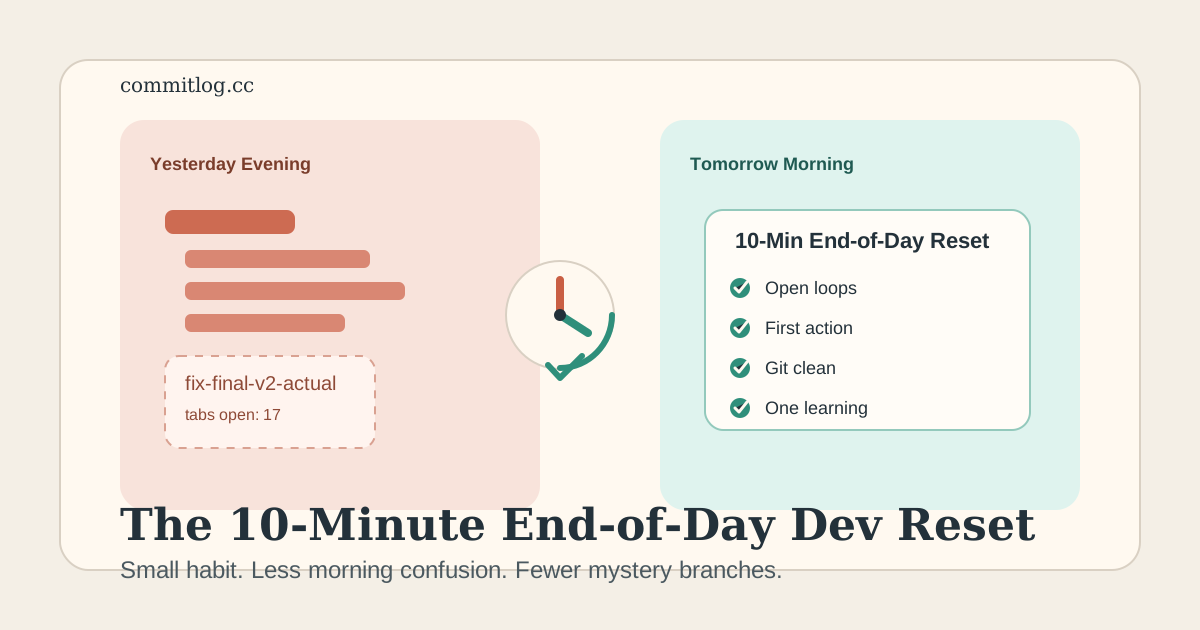
You close your laptop at 7:14 PM feeling great.
You open it the next morning at 9:07 AM and immediately ask: "Why is this branch named fix-final-v2-actual?"
That gap is expensive.
Most developer productivity problems are not typing speed problems. They are context-loss problems. The code is usually still there. The reasoning is not. Yesterday you knew exactly why you left a TODO near a query, why you skipped one test, and why that console log looked suspicious but "safe for now." Today you are a detective in your own repo.
A small end-of-day reset fixes this. Not a journaling ritual with scented candles. Just 10 focused minutes.
Why This Works Better Than "I Will Remember"
"I will remember tomorrow" is one of the most optimistic lies in software engineering. Right next to "this migration is low risk" and "quick rebase, two minutes."
Your brain does not store unfinished implementation context as reliably as you think, especially after meetings, context switches, and 17 browser tabs pretending to be useful. A lightweight closing routine externalizes the important bits before memory degrades.
The win is not philosophical. It is operational:
- Faster startup the next morning
- Fewer accidental git mistakes
- Less duplicated debugging
- Lower stress when priorities shift overnight
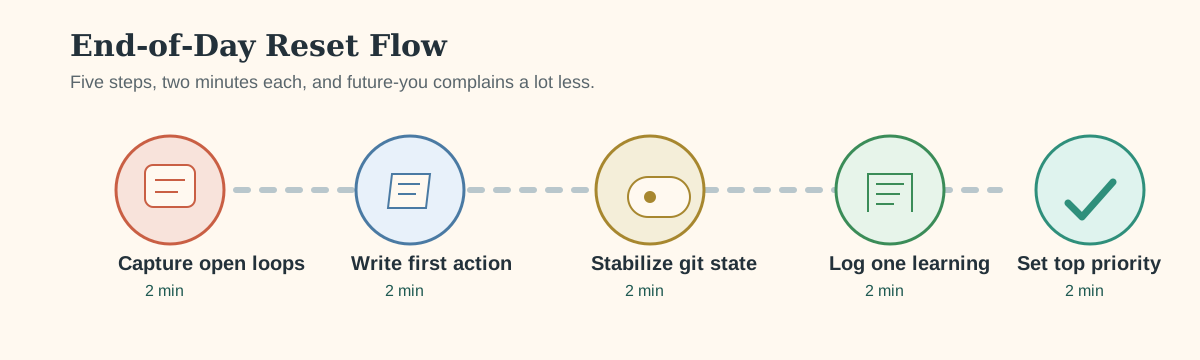
The 10-Minute Reset (5 Steps)
1) Capture Open Loops (2 min)
Write 3 to 5 bullets about what is incomplete.
What to capture:
- What is done
- What is blocked
- What is uncertain
Example:
- Implemented pagination in API, but client still uses old response shape.
- Failing test only on edge case with empty filter array.
- Need confirmation from Priya on backward compatibility for mobile clients.
Why it matters: tomorrow you restart from facts, not vibes.
2) Write Tomorrow's First Action (2 min)
Write one explicit first step you will take tomorrow. It must be actionable in under 60 seconds.
Bad: "Continue auth work"
Good: "Run npm test -- src/auth/session.test.ts and fix failing refresh-token test"
Why it matters: the hardest part of restarting is deciding where to begin. Remove that decision tax.
3) Stabilize Git State Intentionally (2 min)
Before sign-off, do one of these on purpose:
- Commit meaningful progress, or
- Stash with a useful message
Example stash pattern:
git stash push -m "wip: session timeout bug - cookie path investigation"
Why it matters: ambiguous local state creates morning chaos. Clean state creates momentum.
4) Log One Learning or Pitfall (2 min)
Write one sentence about what you learned today.
Examples:
- "Staging uses stricter cookie domain rules than local."
- "This endpoint is called by cron and UI; changing response shape needs compatibility window."
- "Query got slower because index was on (team_id, created_at), not (created_at, team_id)."
Why it matters: this is future-you's shortcut around repeated mistakes.
5) Set Tomorrow's Top Priority (2 min)
Pick exactly one priority for tomorrow morning.
Not three. Not "depends." One.
Example:
- "Ship safe fix for session expiration without changing token format."
Why it matters: if Slack catches fire at 10:30 AM, at least your first focused hour went where it mattered.
Copy-Paste Checklist
Use this as-is in a daily note:
## End-of-Day Reset (10 min)

- [ ] Open loops captured (3-5 bullets)
- [ ] Tomorrow's first action written (specific command/task)
- [ ] Git state stabilized (commit or named stash)
- [ ] One learning/pitfall logged
- [ ] Top priority for tomorrow selected (exactly one)
If you want a tiny template for notes:
Date: YYYY-MM-DD
Done today:

-

Open loops:

-

Tomorrow first action:

-

One learning:

-

Top priority tomorrow:

-
Real Example: Bugfix Paused Mid-Investigation
Say you are fixing an auth timeout bug at 6:50 PM.
Without a reset, tomorrow starts with:
- "Which environment reproduced this?"
- "Why did I skip that test?"
- "Was I changing middleware or token refresh logic?"
With a reset, tomorrow starts with:
- Repro note: timeout reproduced on staging only
- First action: run targeted auth tests
- Git state: stashed with clear message
- Learning: staging cookie policy differs
- Priority: patch without token-format change
Same bug. Very different morning.
Keep It Small, Keep It Daily
This routine should stay boring. If it turns into a 45-minute life-optimization ceremony, it dies in a week.
The goal is not perfect documentation. The goal is reducing re-entry friction.
Ten minutes per day might look small, but over a month it compounds into:
- fewer lost threads
- fewer "what was I doing" mornings
- fewer risky end-of-day pushes
- better handoffs and calmer debugging
Future you will still be dramatic occasionally. But at least future you will have notes.
Comments
Join the discussion on GitHub.