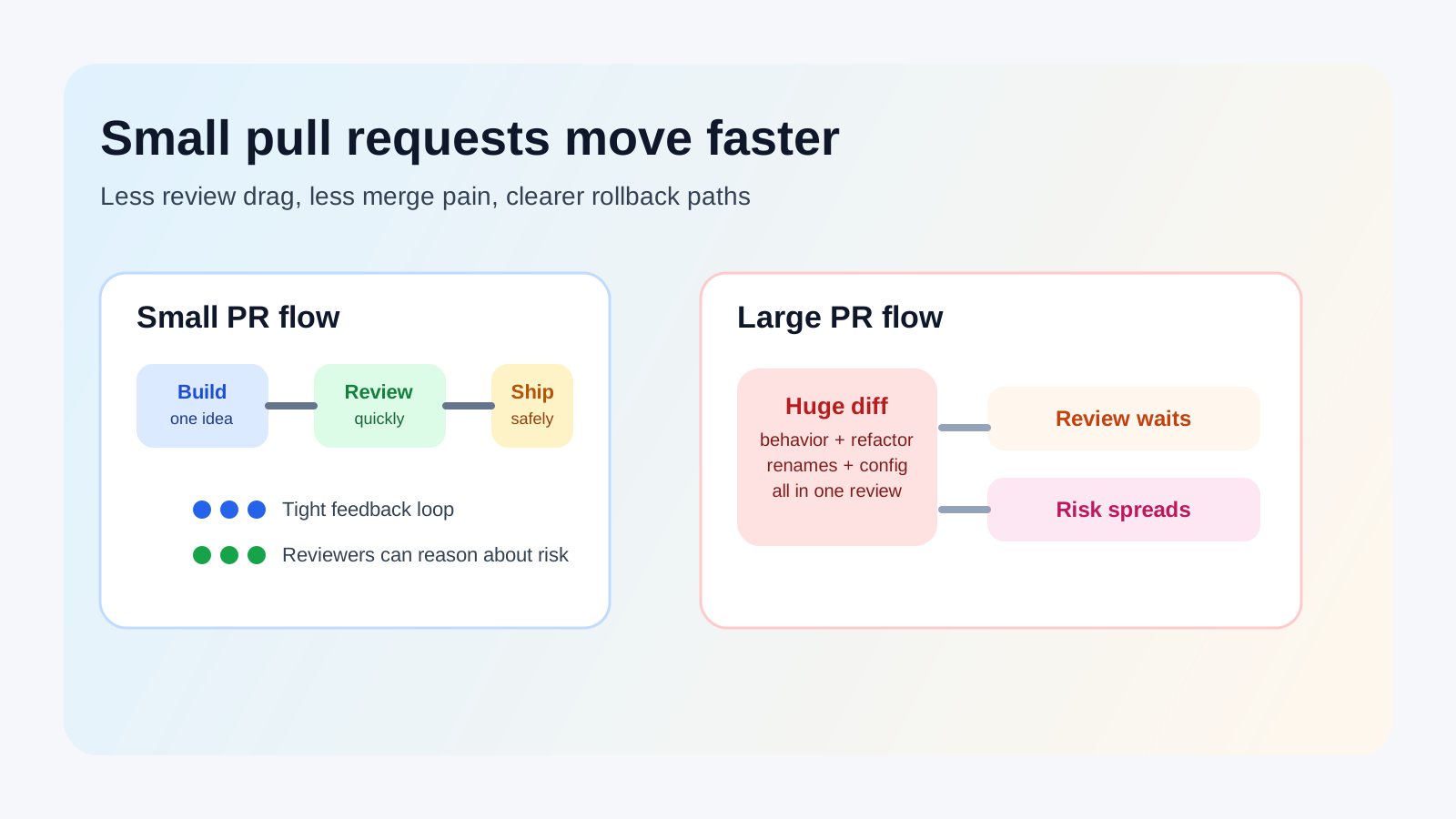
The feature only took half a day to code.
The pull request took two days to get through review.
That gap is where a lot of software teams quietly lose time.
The code was not especially complicated. The problem was that the pull request mixed a database change, a UI refactor, a new validation rule, test cleanup, and some opportunistic renaming into one large diff. Nobody reviewing it could hold the whole thing in their head in one pass. One reviewer skimmed the backend changes and ignored the frontend. Another focused on naming and missed the risk in the migration order. QA got the branch late. The author had to rebase twice while waiting. By the time the change landed, the team had spent more time coordinating the PR than building the feature itself.
That is a normal team problem, not an extreme one.
When engineers talk about moving fast, they often mean local implementation speed: how quickly they can write code, get tests passing, and push a branch. But shipping speed is not the same thing. Shipping speed includes review latency, rework, merge conflicts, test confidence, rollout risk, and how easy it is to undo a bad change. Large pull requests hurt all of those at once.
This guide is about why small pull requests usually save more time than fast coding, what large PRs really cost, and how to split work into smaller reviewable changes without turning your workflow into ceremony.
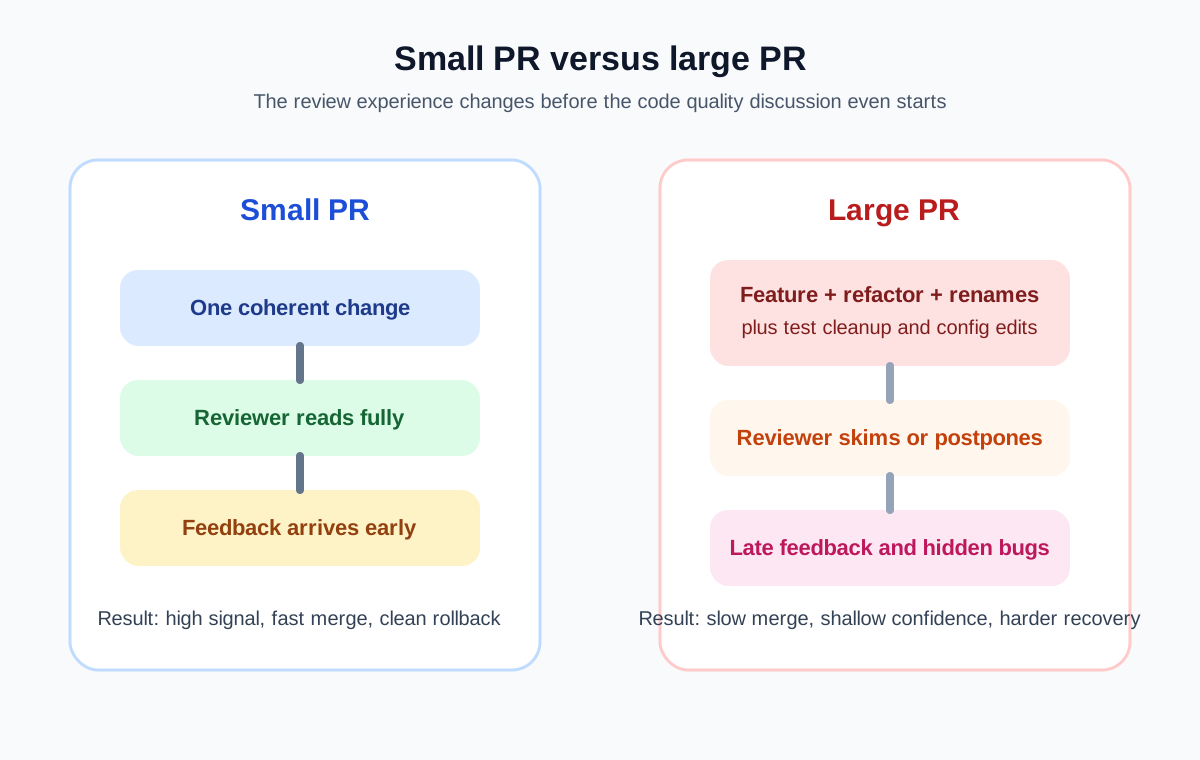
The Short Answer: Why Small Pull Requests Ship Faster
If you only want the operating model, it is this:
| Pattern | What happens in practice | Why it matters |
|---|---|---|
| Small, coherent PRs | reviewers can understand the change in one sitting | review quality stays high instead of becoming approval theater |
| Smaller batches of change | feedback arrives earlier | rework stays cheap and mistakes are isolated sooner |
| Short-lived branches | fewer merge conflicts and less branch drift | coordination cost stays low |
| Narrower change scope | tests, QA, and rollout are easier to reason about | confidence goes up without adding process |
| Clean separation of concerns | rollback and debugging get simpler | production issues are easier to trace and reverse |
The key idea is simple: teams do not move faster when code gets written quickly. They move faster when change flows through the whole system with less friction.
That means:
- less time waiting for review
- less time explaining giant diffs
- less time rebasing stale branches
- less time debugging bundles of unrelated changes
- less time undoing work that was too tangled to land safely
The rest of the article is about why that happens and how to work this way without creating fake overhead.
Why Coding Fast Is Not the Same as Shipping Fast
Coding speed is a local metric. Shipping speed is a system metric.
That distinction matters more than people think.
An engineer can move quickly on their laptop and still slow the team down if the result is a branch that is hard to review, hard to validate, and hard to merge. In that case the author has not removed work. They have pushed work downstream into review, QA, release, and incident handling.
This is why large PRs often feel efficient to the author and expensive to everyone else.
From the author's seat, one large PR can look clean:
- one branch
- one context
- one review request
- one merge
From the team's seat, the same PR can mean:
- a diff nobody can fully review in one pass
- comments that arrive too late to be cheap
- a branch that drifts while waiting
- a risky release because too much changed together
The right question is not "How fast did I finish coding?" It is "How fast can this change be understood, verified, merged, and recovered if needed?"
That is the same mindset behind Testing in the Real World. Confidence does not come from doing more things in one batch. It comes from structuring work so the system can tell you quickly whether a change is safe.
What Large Pull Requests Actually Cost Teams
Large pull requests do not just annoy reviewers. They create concrete costs.
The first cost is delay. A reviewer can usually fit a small PR into a gap between meetings. A large PR often needs a dedicated block of attention, which means it waits longer in the queue.
The second cost is review quality. Once a diff gets large enough, reviewers stop doing careful reasoning and start doing selective sampling. They check a few files, leave a few comments, and approve because they have already spent enough time on it.
The third cost is context loss. By the time meaningful feedback arrives, the author has often switched tasks. Now every review comment costs extra because the original reasoning has to be loaded back into memory.
The fourth cost is coordination. QA has more surface area to validate. Release owners have more uncertainty to assess. Teammates touching nearby code have more risk of conflict. The PR becomes a small project instead of a small change.
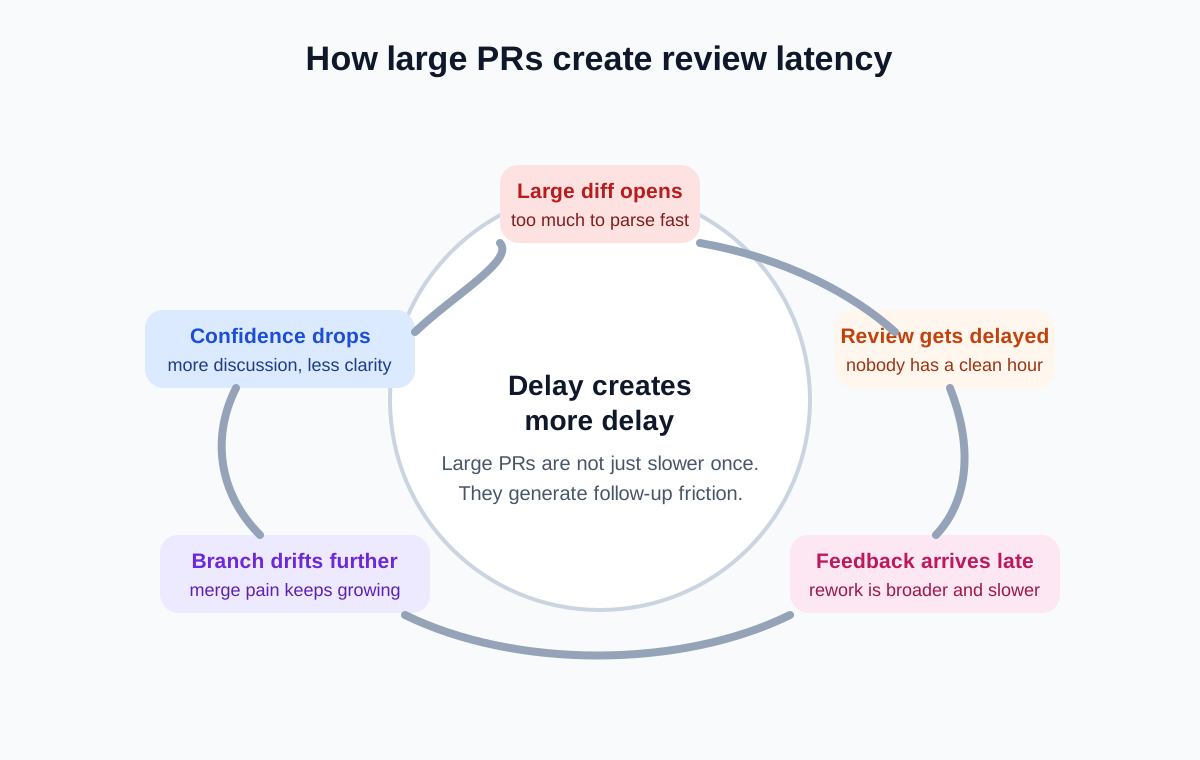
One useful way to think about this is as a feedback loop:
- The PR gets larger.
- Review takes longer to start.
- Feedback arrives later.
- Rework becomes more expensive.
- The branch stays open longer.
- The PR often gets even larger before it merges.
That is how teams end up in a situation where everyone says they are moving fast, while actual lead time keeps getting worse.
Why Review Quality Drops as PR Size Grows
Review quality is limited by human attention, not good intentions.
Most reviewers do not fail because they are careless. They fail because the diff asks too much of them at once.
When a PR is small and coherent, a reviewer can answer the questions that actually matter:
- What problem is this solving?
- Is the behavior correct?
- Is the test coverage aimed at the real risk?
- If this breaks, where will it break?
When a PR is large, those questions get displaced by cheaper ones:
- Does the naming look okay?
- Did lint pass?
- Does anything obviously dangerous jump out?
- Can I approve this without blocking the team?
That is the shift from real review to approval theater.
Approval theater is dangerous because it looks like process is working. The PR has comments. The checks are green. The merge button gets pressed. But nobody actually had enough cognitive space to evaluate the whole change with confidence.
This gets worse when unrelated concerns are mixed together. If one PR contains a refactor, a feature, a migration, test changes, and some formatting cleanup, the reviewer has to constantly switch mental models. Every switch increases the chance that they will miss the actual risk.
Small PRs work better because they reduce cognitive scope. They do not magically create better reviewers. They make competent review possible.
How Large PRs Create Merge, Rollback, and Debugging Pain
Large PRs do not stop being expensive after approval.
They also make merge, rollout, rollback, and debugging harder.
The first problem is branch drift. The longer a branch stays open, the more likely other work will land nearby. Now the author has to merge or rebase a moving target, often right before release when the pressure is already high.
The second problem is rollback. If a PR bundles several concerns together, reverting it means undoing good and bad changes as one unit. That is manageable when the PR represents one coherent idea. It is painful when the PR is really five ideas wearing a trench coat.
The third problem is debugging. If a production issue appears after a large change lands, the search space is bigger. Was it the schema migration, the caching tweak, the validation change, or the UI assumptions? The more concerns bundled together, the longer it takes to isolate the fault.
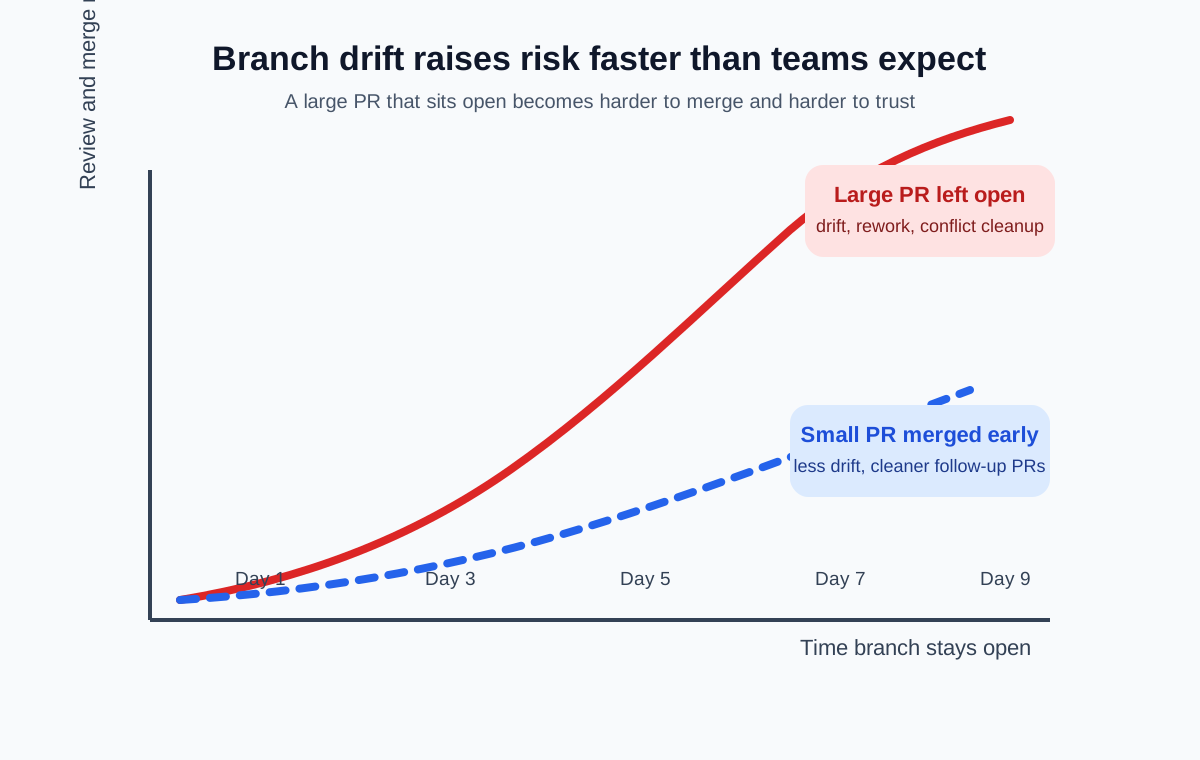
This is one reason articles like Common Git Mistakes and How to Fix Them Safely keep coming back to branch size and change hygiene. Good Git habits are not about pretty history. They are about making change easier to trust and easier to unwind.
Here is a realistic example.
Bad bundle:
- rename service methods
- change API response shape
- add new billing validation
- update database schema
- refactor shared test helpers
Better sequence:
- land shared test helper refactor alone
- land schema preparation alone
- land API shape support behind compatibility logic
- land billing validation behavior
- remove old compatibility path later
The second approach takes a bit more thought up front, but it reduces review load, lowers rollout risk, and gives you clean rollback points.
That is usually a good trade.
What Small Enough to Review Well Actually Means
Small does not mean "under 200 lines" or any other magic threshold.
Line count can be a useful signal, but it is not the definition.
Small enough to review well usually means all of these are true:
- the PR solves one coherent problem
- a reviewer can understand the intent in one sitting
- the risky parts are easy to locate
- the test scope is obvious
- the rollback story is clear
- the author can explain the change without a long guided tour
That is why a 500-line mechanical rename can sometimes be safer than a 120-line PR that mixes business logic, data migration, and auth behavior.
The better framing is cognitive size, not file count.
If a reviewer needs a live walkthrough just to understand what changed, the PR is usually too broad. If the description has to explain three separate goals, the PR is probably doing too much. If the test plan reads like a release checklist, you probably batched too much change into one unit.
For teams working on APIs, this becomes even more important. Contract changes often affect multiple consumers, which is exactly why API Design That Survives Real Teams emphasizes compatibility and sequencing over elegance. Small PRs support that discipline because they force clearer boundaries between prep work, compatibility work, and behavior changes.
How to Split Work Into Smaller Pull Requests Without Fake Busywork
This is the part people resist because it sounds like extra process.
Done badly, it is. Done well, it is one of the cleanest ways to reduce wasted time.
The trick is not to split work randomly. The trick is to split work by dependency and risk.
Good split patterns include:
- preparatory refactors before behavior changes
- schema or interface changes before using them broadly
- feature flags when incomplete behavior should not be visible yet
- mechanical changes separated from logical changes
- stacked PRs when one change clearly depends on another
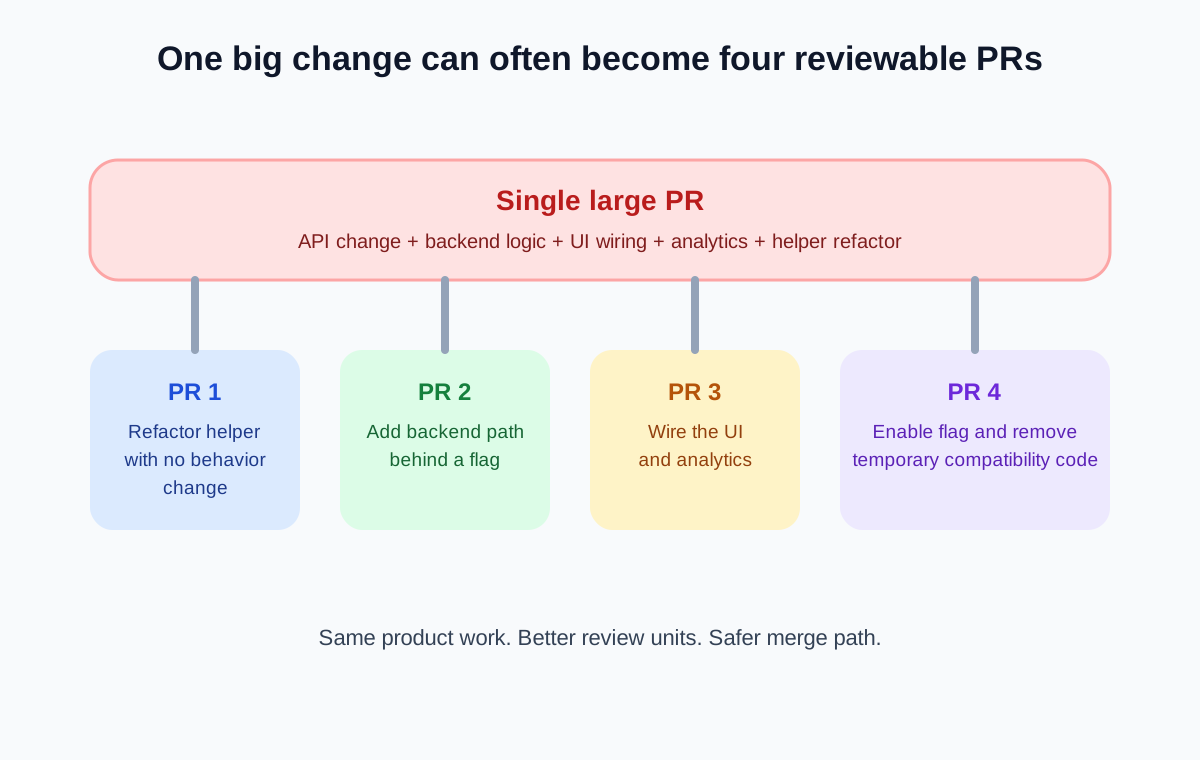
Here is a concrete example for a search feature.
Instead of one giant PR that adds a new index, changes query behavior, updates ranking, adds analytics, and rewires the UI, split it like this:
- add the index and migration
- add backend support behind a disabled flag
- update the UI to use the new response path conditionally
- enable the flag
- clean up the old path after the rollout stabilizes
Each step is reviewable. Each step is testable. Each step has a simpler rollback story.
Stacked PRs can help here if your team is comfortable with them.
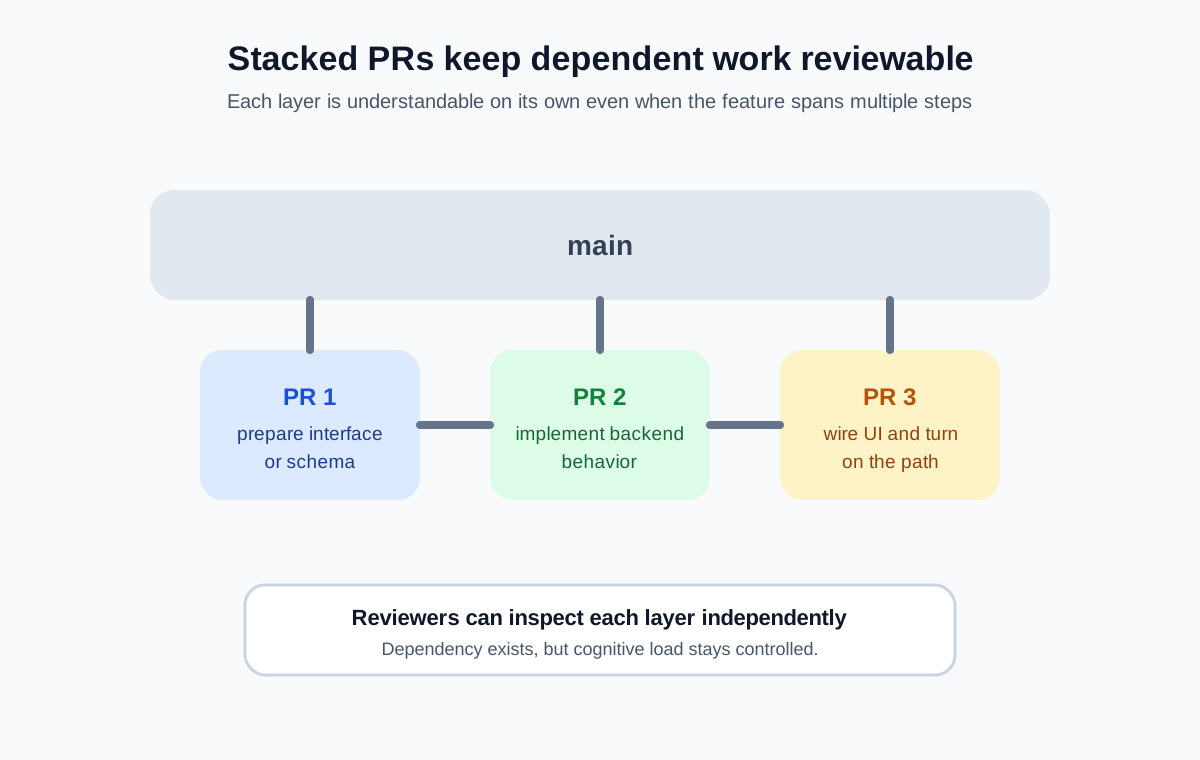
If you use stacked PRs, keep each layer meaningful on its own:
- base PR prepares the groundwork
- next PR introduces the new path
- final PR turns behavior on or completes the user-facing flow
That is not bureaucracy. That is change management.
When Bigger Pull Requests Are Reasonable
Small PRs are a strong default, not a law of physics.
There are cases where a bigger PR is reasonable:
- an urgent hotfix where the scope is narrow and time matters more than ideal decomposition
- a framework upgrade that changes many files mechanically but remains conceptually simple
- generated code updates where reviewers only need to verify source inputs and boundaries
- a migration that touches many files but still represents one coherent technical move
The key question is still the same: can this be reviewed and rolled back with confidence?
Sometimes the answer is yes, even when the diff is large. But large diffs should have a reason, not just momentum behind them.
If a PR is large because the work truly had to be, say that clearly in the description. Call out the risky areas. Tell reviewers how to approach it. Make the path through the change explicit instead of pretending the size is normal.
Habits That Keep Pull Requests Small in Daily Work
Most oversized PRs are not caused by one bad decision. They are caused by small habits repeated for days.
The good news is that the same is true in the other direction.
Habits that help:
- open a draft PR earlier than feels necessary
- review your own diff before asking anyone else to read it
- separate refactors from behavior changes
- merge preparation work as soon as it is independently valid
- ask "Can this land in two steps?" before opening a broad PR
- keep branches short-lived instead of waiting for the feature to feel complete
One practical trick is to write the PR description before the PR is finished. If you cannot describe the change in a short, coherent way, you may already be batching too much.
Another is to check whether your tests match the scope of the PR. If the test plan spans multiple systems and many edge cases, that may be a sign that the change should not be one review unit.
You do not need perfect decomposition. You need better decomposition than "I will sort it out when the branch is done."
A Practical Checklist for Authors and Reviewers
Before opening or approving a PR, run through this quickly.
For authors:
- Is this solving one coherent problem?
- Did I mix cleanup, refactor, and behavior change unnecessarily?
- Can a reviewer understand this without a meeting?
- If this fails in production, can we isolate or revert it cleanly?
- Could part of this have landed earlier as prep work?
- Did I review my own diff with the same skepticism I expect from others?
For reviewers:
- Do I understand the intent of the change, not just the syntax?
- Is the PR small enough to evaluate with confidence right now?
- Are the tests aimed at the real risk?
- Is any part of the diff unrelated to the stated goal?
- If this merged today, would I feel comfortable owning the result in production?
If the honest answer to several of those is no, the fix is often not "review harder." The fix is "make the unit of change smaller."
A Simple Template for Splitting an Oversized Change
When a branch is already too big, this lightweight template helps:
PR 1: prep work only
- refactor shared code
- add schema or interface support
- no user-visible behavior change

PR 2: behavior behind a flag or compatibility layer
- introduce the new path safely
- keep rollback simple

PR 3: enablement or adoption
- switch callers or UI flows
- validate metrics and edge cases

PR 4: cleanup
- remove old code after confidence is high
This will not fit every problem, but it fits far more real work than teams usually assume.
Closing Thought
The point of a pull request is not to prove how much work you got done before asking for feedback.
The point is to move change through a team safely.
That means optimizing for something slightly less flattering than personal coding speed: clarity, reviewability, recoverability, and trust.
Small pull requests help because they reduce the amount of uncertainty the team has to carry at once. They make feedback faster, reviews more honest, rollouts safer, and debugging narrower.
That is why they save time.
Not because they look tidy.
Because they let software move forward with less friction.
Comments
Join the discussion on GitHub.